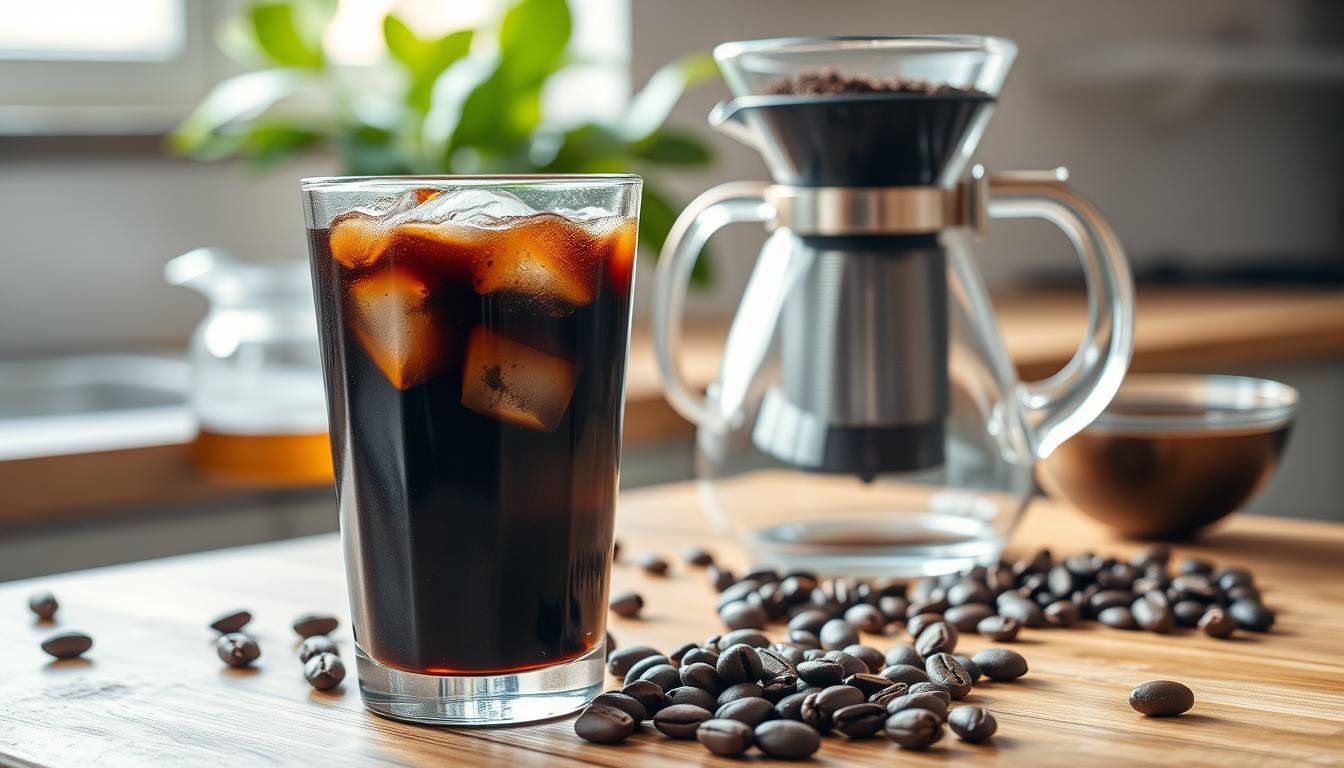
How to Make a Cold Brew at Home
We start with a simple definition: cold brew is a slow infusion of coarsely ground coffee in cool water for 12–24 hours. The result is a smooth, low‑acid concentrate that tastes naturally sweeter and less bitter than many hot methods.
Our basic gear list is small: a jar or pitcher with a lid, a fine mesh strainer lined with cheesecloth or a paper filter, and optionally a grinder and scale. A French press doubles as brewer and strainer when we want one‑step brewing.
We recommend a starter ratio of 1 cup whole beans to 4 cups water for a balanced concentrate. Use filtered water for clarity and store the strained concentrate in the fridge for up to a week.
Serve over ice and dilute with water or milk, or warm the concentrate gently for a smooth hot cup. Batch prep on the weekend keeps us stocked with café‑quality coffee all week.
Why Cold Brew Beats Watery Iced Coffee
A low‑temperature steep pulls the good stuff from beans while leaving bitterness behind. We get bold, rounded coffee without the sharp acids that can come from hot extraction.
Slow infusion in cool or room temperature water extracts sweet, soluble compounds and fewer bitter or sour molecules. That yields a smoother, almost sweet cup that keeps working over ice.

By contrast, iced coffee starts as hot brewed coffee poured over ice. If it isn’t made strong and cooled properly, the result can taste diluted or stale. A cold brew concentrate holds its integrity, so each sip stays flavorful.
- Cool extraction draws desirable solubles while minimizing bitterness.
- Filtered water makes the concentrate cleaner and sweeter.
- Twelve hours is a reliable baseline; much more time risks harsh notes.
- The low‑acid profile is gentler on the palate and stomach.
This method is forgiving on technique and time. We can serve the same smooth concentrate over ice or heat it gently for a hot cup without losing balance. That’s a practical way to keep our weekly coffee sharp and satisfying.
What We Need: Beans, Water, and Simple Gear
Gathering the right beans, clean water, and simple gear sets the stage for reliable batches. We focus on items that keep the process repeatable and the concentrate clear.
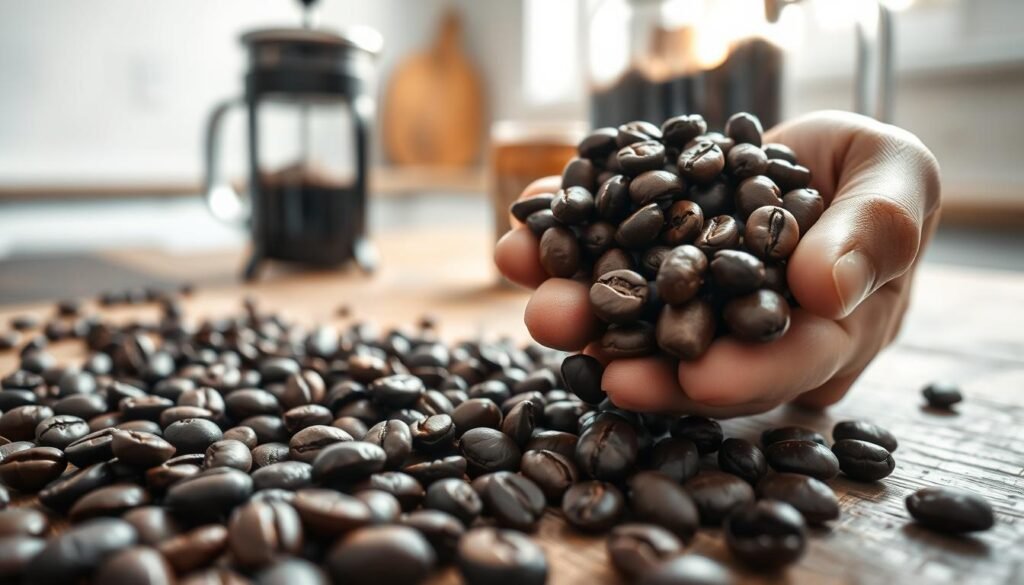
Choosing beans and grind
We pick freshly roasted coffee beans and grind on the coarsest setting. Aim for a coarse cornmeal texture; finer grinds over-extract and make a muddy cup.
Filtered water matters
Use filtered water for clarity and sweetness. Measure coffee and water for repeatable results: about 1 cup beans to 4 cups water makes a versatile concentrate.
Containers and filtration
We brew in a Mason jar or a lidded pitcher and cover during the 12 hours (up to 24) steep. Strain slowly through a fine mesh strainer lined with cheesecloth or paper filters for a clean cup.
Nice-to-haves
A burr grinder and a scale make batches predictable. A French press can steep and press in one vessel, then we decant the concentrate for storage.
| Item | Why we use it | Tip |
|---|---|---|
| Jar / Pitcher | Simple, wide opening for stirring and saturation | Cover during steep; large enough for full batch |
| Strainer + Cloth | Removes fine grounds and yields clear concentrate | Line strainer with cheesecloth or paper filter |
| Grinder / Scale | Consistency and accurate ratios | Grind just before brewing; weigh beans and water |
How to Make a Cold Brew at Home: Step-by-Step Method
We use a short, practical routine so each batch is consistent. Follow these steps and you’ll get a clean, low‑acid concentrate every time.

Grind and combine
We grind coffee coarsely to a coarse cornmeal texture. This keeps extraction clean and avoids sludge.
Dump the grounds into a jar or pitcher and pour in cool water. Stir slowly so all particles are wet.
Steep and strain
Cover and steep for about 12 hours; up to 24 hours yields a bolder concentrate. Choose room temperature for a slightly faster steep or the fridge for a gentler one.
Strain slowly through a fine mesh strainer lined with cheesecloth or a paper filter. Repeat if needed for clarity.
Store and serve
Transfer the filtered concentrate to a clean bottle and keep it in the fridge for up to a week.
Serve over ice and dilute with water or milk to taste, or gently warm for a smooth hot cup.
| Step | Time | Notes |
|---|---|---|
| Grind | 5 minutes | Coarse cornmeal texture |
| Combine | 5 minutes | Jar or pitcher; stir to saturate grounds |
| Steep | 12–24 hours | Room temperature or fridge; covered |
| Strain & Store | 10–20 minutes | Fine strainer + cheesecloth; refrigerate up to 1 week |
Dialing In Ratio, Strength, and Brewing Time
Finding the right balance of beans and water is the fastest route to a repeatable cup. We start with a reliable baseline and tweak one variable at a time.
Starter ratios and stronger concentrates
Our dependable ratio is 1 cup beans to 4 cups water for a balanced concentrate. For more intensity, try a 1:2 dose—about 1.5 cups grounds with 3 cups water—and dilute in the glass.
Preventing weak, bitter, or muddy results
Use filtered water and a coarse ground. Fully saturate the grounds and steep at least 12 hours before straining.
If the cup tastes muddy, run the concentrate through a paper filter. If bitter, shorten steep time or coarsen the grind.
Temperature and dilution
Room temperature steeps faster; fridge steeps are gentler and may need longer. We taste after the recommended window and adjust.
Finish each serving by diluting with cold water for clarity or milk or plant milk for creaminess until the flavor is right.
| Ratio | Beans (cups) | Water (cups) | Result |
|---|---|---|---|
| Balanced | 1 | 4 | Versatile concentrate, easy to dilute |
| Strong | 1.5 | 3 | Bolder concentrate, stands up to ice |
| Gentle | 1 | 6 | Milder flavor, lighter body |
Pro Tips for Flavor, Storage, and Zero-Dilution Iced Coffee
We keep a few small tricks on hand that lift flavor and simplify storage. These tips help us serve full‑flavor iced glasses and warm cups with little fuss.
Ice that preserves taste
We freeze coffee ice cubes from fresh concentrate so iced drinks chill without watering down. They also boost shakes and smoothies when we want a coffee kick.
French press workflow
We steep in the French press overnight, press slowly, and decant into a clean bottle. If any fines slip through, we run the concentrate through a paper strainer for polish.
Storage and gentle reheating
We store concentrate in the fridge for up to a week in glass bottles with tight lids and label the date. For hot coffee, we heat gently and add a splash of water or milk so the cup stays balanced.
- Batch brew on weekends so we can pour coffee on demand.
- Avoid repeated temperature swings; only pour what we plan to drink.
- Keep a tray of coffee ice for warm days and quick pick‑me‑ups.
| Tip | Why it helps | Practice |
|---|---|---|
| Coffee ice cubes | Preserves strength as ice melts | Freeze in silicone trays from fresh concentrate |
| French press finish | Simple steep and press workflow | Press slowly; decant into bottle immediately |
| Fridge storage | Keeps aromatics and freshness | Use glass bottles, label date, use within 7 days |
| Paper strainer polish | Removes fines and improves clarity | Filter if any sediment appears after pressing |
Beyond the Basics: Methods and Smart Uses at Home
We expand our routine by trying alternative extraction styles that spotlight different aromas and clarity.
Try other brewing approaches
Japanese iced coffee pours hot over ice for bright, immediate aromatics. It yields a crisp iced coffee that highlights single‑origin beans.
Aeropress cold and iced routines give fast, concentrated cups with low equipment needs. Slow drip towers and ice drip setups are more of a showpiece but deliver delicate flavor.
Weekend batch planning
We start large batches Saturday night and strain Sunday morning. That stocks the fridge for weekday pours, saving time and shop trips.
Reuse spent grounds thoughtfully
Spent grounds work well as mulch, slug deterrent, or mixed into coconut oil for a body scrub. We check plants for acid sensitivity and avoid overwatering when adding grounds to soil.
| Approach | Benefits | Best use |
|---|---|---|
| Japanese iced coffee | Bright, aromatic | Single‑origin beans, quick iced coffee |
| Aeropress (cold/iced) | Compact, fast | Travel or small batches |
| Long‑steep (French press/Toddy) | Round, low‑acid concentrate | Batch brewing, fridge storage |
We keep a tray of coffee ice cubes for future glasses and note our favorite beans, grind settings, and water ratios so good results repeat year after year.
Your Perfect Batch Awaits
Ready batches start with one clear plan: pick a ratio, coarse grind, filtered water, and a covered jar or pitcher tonight so your cold brew is ready tomorrow.
Use 1 cup beans with 4 cups water, steep about 12 hours covered, then strain through a fine mesh strainer lined with cheesecloth. Store the concentrate in the fridge for up to a week.
Want more punch? Try 1.5 cups ground coffee with 3 cups water and dilute in the glass with water or milk. Freeze coffee ice cubes to avoid dilution.
Explore French press, Aeropress, or Japanese iced coffee as your taste evolves. Reuse spent coffee grounds for garden or scrubs, and note favorite beans and ratios so each batch gets better over years.